
Disclaimer: I am not an attorney and this is not legal advice. Please seek competent legal counsel if you have questions. This is for educational purposes only.
According to a research study done by NAR from 2016-2020, 12% of all real estate transactions included the use of a 1031 exchange. Of that 15% of those transactions involved apartment buildings.
This represents billions of dollars of potential investor capital and there is a massive opportunity to partner with 1031 exchanges in your real estate syndication.
A 1031 cannot invest in your syndication the way a normal LP invests in that a 1031 must be on the title of the property to meet the qualifications of a 1031 exchange rather than taking title to a security that is secured by the property.
In other words, it can only invest in other real estate not in shares of other real estate. This is accomplished through TIC or Tenants in Common vesting.
There are some pros and cons to partnering with a 1031. To better understand them, we first must look at how the typical apartment syndication is structured below:
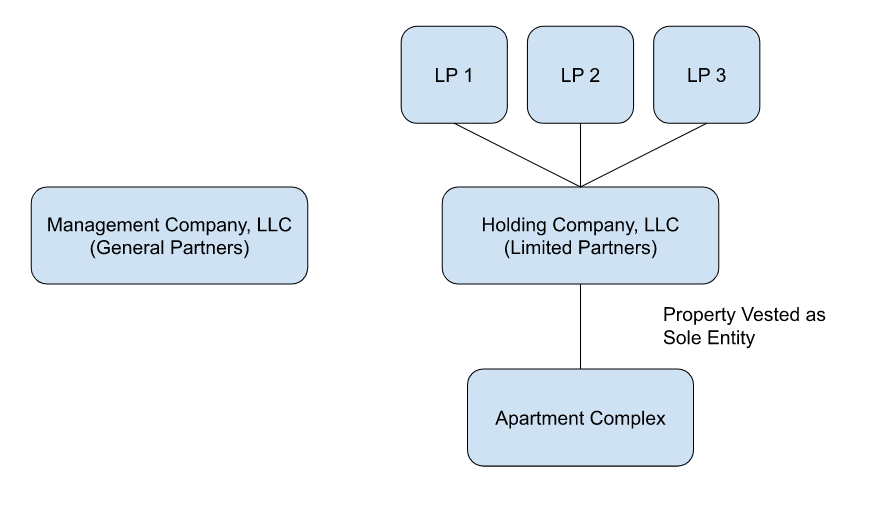
Sample Warranty Deed Clause with 1031 as Typical Syndication
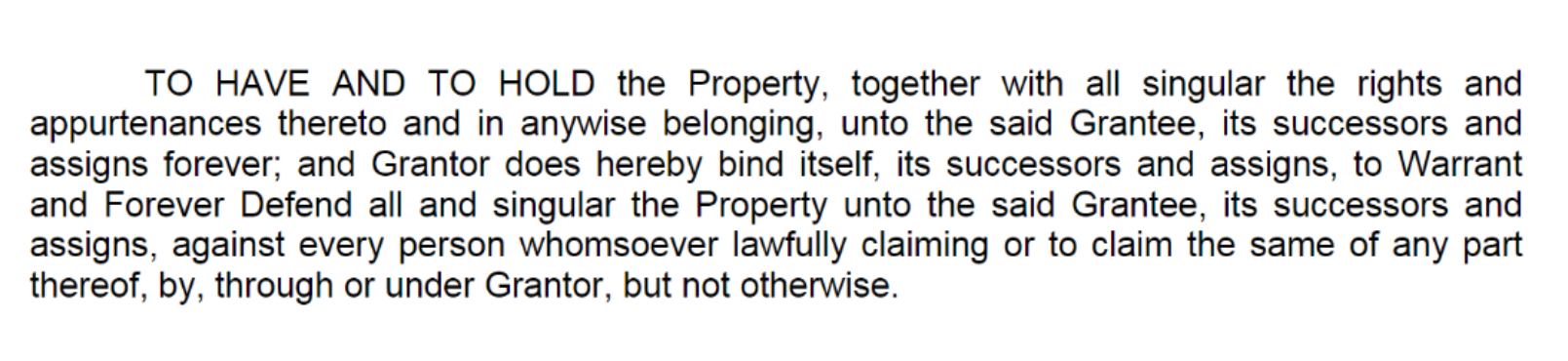
Typical TIC Structure When a 1031 is Involved
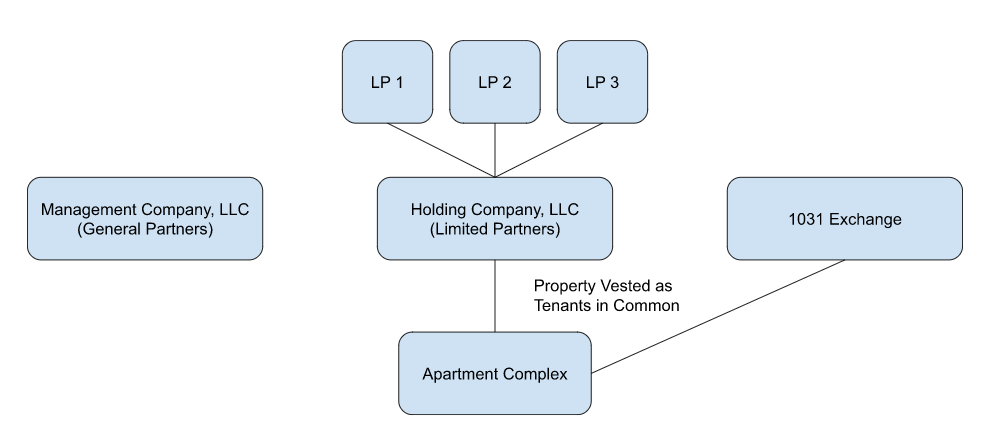
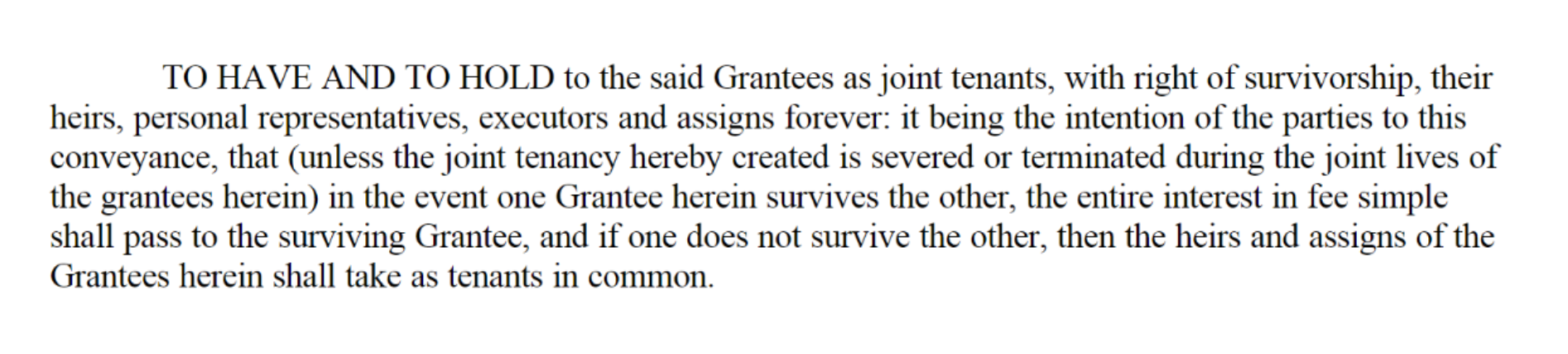
Sample Warranty Deed Clause with 1031 as Tenant in Common (TIC)
Pros
Access to Additional Capital (Often Motivated by a Deadline)
Because they often come with very large investments their interests are likely in alignment with the Limited Partners and they have a vested interest in the success/profitability of the project.
Cons
1031 Owner must sign off on all capital events (including purchase and refinance) since they are on title which makes them a sort of pseudo-general partner in that regard.
Limits flexibility on how the sponsor can be paid; see the following publication 2021 Publication 544 IRS . You have to distribute profits proportional to ownership. Meaning you can't get carried interest on the 1031’s portion of the profits or use a Preferred return.
This can be a great way to help fund your syndication but comes with a bit of extra complexity and strings attached. Make sure the amount is big enough to make it worth your time.